
COP30: Between Fragile Progress and Deadlocks — The Truth from an African Negotiator
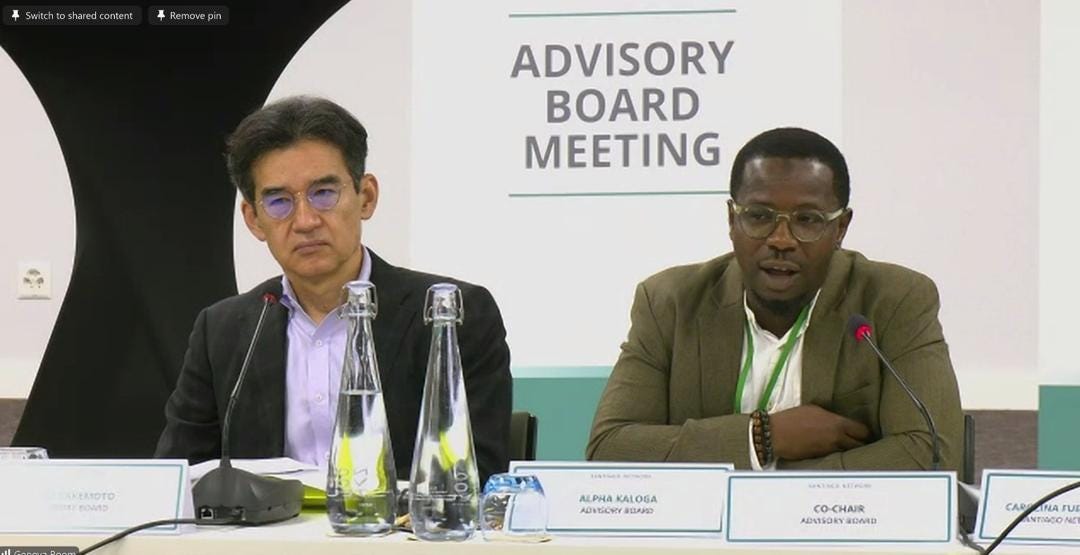
By Alpha O. Kaloga- Alpha Omar Kaloga is the Lead Negotiator for the African Group on Loss and Damage.

When you arrive in Belém, the very air reminds you of what the world risks losing: a heavy, living heat, so humid it clings to your skin, thick with the deep scent of the forest. This city, the gateway to the Amazon, hosted COP30—the 30th Conference of the Parties to the United Nations Climate Convention.
The Context
On November 22, 2025, after two weeks of tense discussions, the plenary gavels finally struck the table. For many, these COPs seem distant and technical, reserved for diplomats. In reality, these are the places where the world decides—or hesitates—to face the climate crisis. Behind every negotiated word and every bracketed phrase, there are human lives, livelihoods, and already fragile national budgets.
For Africa, this is not a diplomatic exercise. It is a matter of survival. Our continent emits less than 4% of global greenhouse gases, yet we are the ones hit hardest. We face endless droughts, floods that wash away a year’s work in a single night, and cyclones that tear down infrastructure built with patience, courage, and limited means in just a few hours.
“A COP Under Tension”
Every year, these climate shocks eat away between 3% and 5% of our GDP. These are billions that should have funded schools, strengthened hospitals, improved roads, and offered a more stable future for our youth.
It was with this reality in the background—concrete and heavy—that we, the African negotiators, walked through the doors of the halls in Belém. We were not there to philosophize about the climate, but to defend the survival and dignity of millions.
COP30 took place in a worrying context. Ten years after the Paris Agreement, the global trajectory is clearly off track. Even if all current commitments were met to the letter, we are heading straight for warming between 2.3°C and 2.8°C. For many, these figures remain abstract. For African countries, they already have a face: unbearable heatwaves, receding coastlines, and agricultural seasons that no longer make sense. This is not a hypothetical future; it is the logical continuation of a crisis we are already enduring, season after season.
2025: Geopolitical Crises Reshaping Climate Negotiations
This year 2025, the geopolitical context did nothing to calm our anxieties. The United States did not even see fit to send an official delegation. The leaders of China and India, two of the largest emitters, were absent. Meanwhile, a highly organized group of oil-producing countries arrived with a single objective: to prevent any serious progress toward phasing out fossil fuels. We knew, entering the rooms in Belém, that the fight would be tough.
But the location mattered. Negotiating on the edge of the Amazon was a constant reminder: this crisis is not just about “carbon accounting.” It concerns forests, water cycles, indigenous territories, and the ecosystems that keep us alive. For us Africans, accustomed to defending the Congo Basin forests, this symbolism resonated deeply.
If you ask an African negotiator what comes up year after year, the answer is immediate: emission reduction ambition and climate finance. We know what needs to be done. But we lack concrete action from major emitters and, above all, predictable resources to mitigate, adapt, and manage loss and damage—without sinking further into debt.
What We Brought from Baku
At COP29 in Baku, countries agreed on a new global finance goal: at least $1.3 trillion per year by 2035, including $300 billion in public funding. On paper, it was ambitious. In Belém, the challenge was to turn this promise into something concrete.
Adaptation: A partial but real victory. For us, the greatest progress concerned adaptation finance—funding that allows countries to cope with already visible impacts: flood protection, resilient agriculture, water management, early warning systems, and public health adapted to heatwaves and climate-related diseases.
African countries, along with LDCs (Least Developed Countries) and Small Island States, arrived in Belém asking for a tripling of this funding by 2030. In the end, we obtained a commitment to triple it by 2035. Later than hoped, but politically significant.
Even more decisive was the delivery method. We insisted on grants and highly concessional financing—not more loans. The final text recognizes that adaptation must not worsen debt. It is not perfect, but it is a solid foundation to continue demanding that climate finance does not further ruin our economies. If the $1.3 trillion target is met, approximately $120 billion per year should go to adaptation. It is not enough, but it would be far more than what we receive today.
The Baku–Belém Roadmap
This roadmap attempts to answer the question: “Where will this money come from?” It discusses:
Multilateral bank reform;
Increasing the share of grants;
More effective guarantees;
Blended finance;
Debt-for-climate swaps.
The diagnosis is correct: the current financial system views us as “risky” by default, which increases our borrowing costs and slows access to finance. The real question is: will these ideas become concrete reforms, or remain elegant phrases in a COP decision?
The Door is Open, but the Room is Empty
The term “loss and damage” may sound technical, but it describes simple realities: villages swallowed by the sea, sterile farmland, homes torn away by storms, and cultural sites lost forever. These are impacts to which we can no longer adapt.
At COP28 in Dubai, the world agreed to create a Loss and Damage Fund. In Belém, we moved from the idea to the start of operations: the first call for projects, set replenishment cycles, and the first payments expected in 2026. Symbolically, this is huge. For decades, vulnerable countries have asked for recognition of these irreversible damages.
Data revealing a gap:
$348 million actually paid by mid-2025;
$431 million total promised;
...while losses for Africa could reach hundreds of billions per year by 2030.
In short: we have built the house, but the shelves are empty. We proposed innovative sources—taxes on fossil fuels, shipping, and aviation. They were discussed, then set aside.
Tangible Results?
For now, the fund depends on voluntary contributions from countries that, historically, do not always keep their word.
Adaptation Indicators: Useful but unstable. Another technical but important result concerns the Global Goal on Adaptation of the Paris Agreement. To measure progress, common indicators were needed. After two years of work, 59 indicators were adopted covering water, food, health, ecosystems, infrastructure, livelihoods, and public policy, with cross-cutting sections on gender, human rights, technology, and capacity.
For Africa, this can help better document our needs and guide finance. However, the way some indicators were modified at the last minute—sometimes emptied of their substance—raised significant concerns. Some developing countries stated this clearly in the plenary.
What About the Just Transition?
The “Belém–Addis” process must continue until COP32 in Ethiopia. This is both an opportunity and a frustration: we can still influence it, but the tool remains unfinished when we need it most.
When talking about Africa’s future, one concept recurs: Just Transition. This means gradually moving away from fossil fuels to invest in renewables without leaving workers, economic growth, or energy access behind. At COP30, they launched the Belém Action Mechanism (BAM), intended to be the global platform for steering these changes.
For us in Africa, this is vital. Over 600 million people still lack electricity. A just transition means diversifying economies, training workers, and building new clean industrial sectors.
A Decisive Choice: Between Transition and Trade
However, if the mechanism is not funded, it will remain a beautiful logo on a UN document. One of the most sensitive points concerned the links between transition and trade. The EU’s Carbon Border Adjustment Mechanism (CBAM) worries many African countries, as it could penalize our industrial exports even when they are cleaner. We wanted this included in the final text. Everything was removed. The fight continues.
Fossil Fuels: The Greatest Disappointment
On mitigation—reducing emissions at the source—COP30 failed on the most crucial point. Brazil had proposed a roadmap to phase out fossil fuels, supported by over 80 countries. For us Africans, whose populations suffer the consequences of emissions we did not produce, this was a no-brainer.
But oil-producing countries blocked it. Result: no date, no obligation, no trajectory. This is a heavy defeat. As long as global fossil fuel production increases, adaptation funding will never be enough to protect our communities.
Brazil’s Efforts in Vain?
Brazil did launch two voluntary initiatives. Laudable, but insufficient. The planet cannot settle for optional good intentions.
Forests, Oceans, Biodiversity: Promising ideas, missed appointments. One might have expected an ambitious agreement on forests under the shadow of the Amazon. The result was more discreet. The most notable initiative is the launch of the Tropical Forests Forever Facility, an innovative mechanism to sustainably fund the protection of tropical forests.
This fund could be a game-changer for the Congo Basin and even for Guinea. For once, we are talking about a mechanism that provides regular funding and recognizes the essential role of local communities. But despite the hope Belém carried, no global agreement emerged to end deforestation by 2030. No roadmap, no collective commitment. A missed opportunity in the cradle of the world’s largest rainforest.
Carbon Markets: Opportunities, but Real Risks
COP30 mostly performed “technical housecleaning” on Article 6. Many African countries continue to look to carbon markets as a potential source of funding for restoration and renewables. Done well, these markets can bring significant income. Done poorly, they can dispossess communities and allow rich countries to continue polluting. This is why we insist on fair benefit-sharing, community consultation, environmental integrity, and total transparency.
Technology and Capacity: The Missing Pillars
If there is one point all Africans agree on, it is this: technology and capacity building are the blind spots of the climate regime. We need affordable access to clean tech and the skills to use it. In Belém, texts repeated old promises without breakthroughs on intellectual property or access conditions.
Changing the African Narrative
One positive point: the way Africa told its story this year. We no longer want to be seen only as vulnerable. We are also providers of solutions. We have:
The world’s greatest solar potential;
Immense wind resources;
A dynamic and inventive youth;
Critical minerals essential for the energy transition;
Forests and savannas capable of absorbing carbon.
We aren’t just asking for funding to “cope.” We are asking for investments to build our own green industries in Africa.
So, Did COP30 Serve Africa?
To be honest, the answer is “yes and no.”
Yes, because there was real progress: the tripling of adaptation finance, the operationalization of the Loss and Damage Fund, the Just Transition mechanism, and the fact that COP32 will be held in Africa (Ethiopia), bringing the center of gravity back to our continent.
But at the same time, no. COP30 did not live up to the urgency. There is still no roadmap to phase out fossil fuels. The Loss and Damage Fund remains nearly empty compared to our colossal needs. On technology transfer, there was no breakthrough. We are left with voluntary initiatives dependent on political whims.
From Belém to Addis – What Africa Must Do
As we approach COP31 in Turkey and COP32 in Addis Ababa, our roadmap is brutally clear:
Strengthen our unity: When Africa speaks with one voice, the balance of power shifts.
Demand accountability: So that promised funding becomes delivered funding.
Invest in our own capacity: We need our own engineers, economists, and negotiators.
Presence in other venues: We must be at the G20 and in trade/debt negotiations, not just as observers.
Continue telling our stories: Stories of resilience, innovation, and community.
COP30 was not the great turning point many hoped for, but it was not a shipwreck either. Multilateralism is still holding on—just barely—and it continues to offer a space where Africa can assert its vision.
The opinions shared here are based on my personal experience as an African negotiator and do not necessarily reflect the official position of any specific African State or negotiating group.
Alpha Omar Kaloga is the Lead Negotiator for the African Group on Loss and Damage.